
Swale or regrade
Reshape the surface so water runs off on its own. Nothing buried, so nothing to clog.
Best forGround with some fall to work with
Service 05
French drains, swales, ditches and culverts for ground that holds water, planned around the Lowcountry's high water table rather than in spite of it.
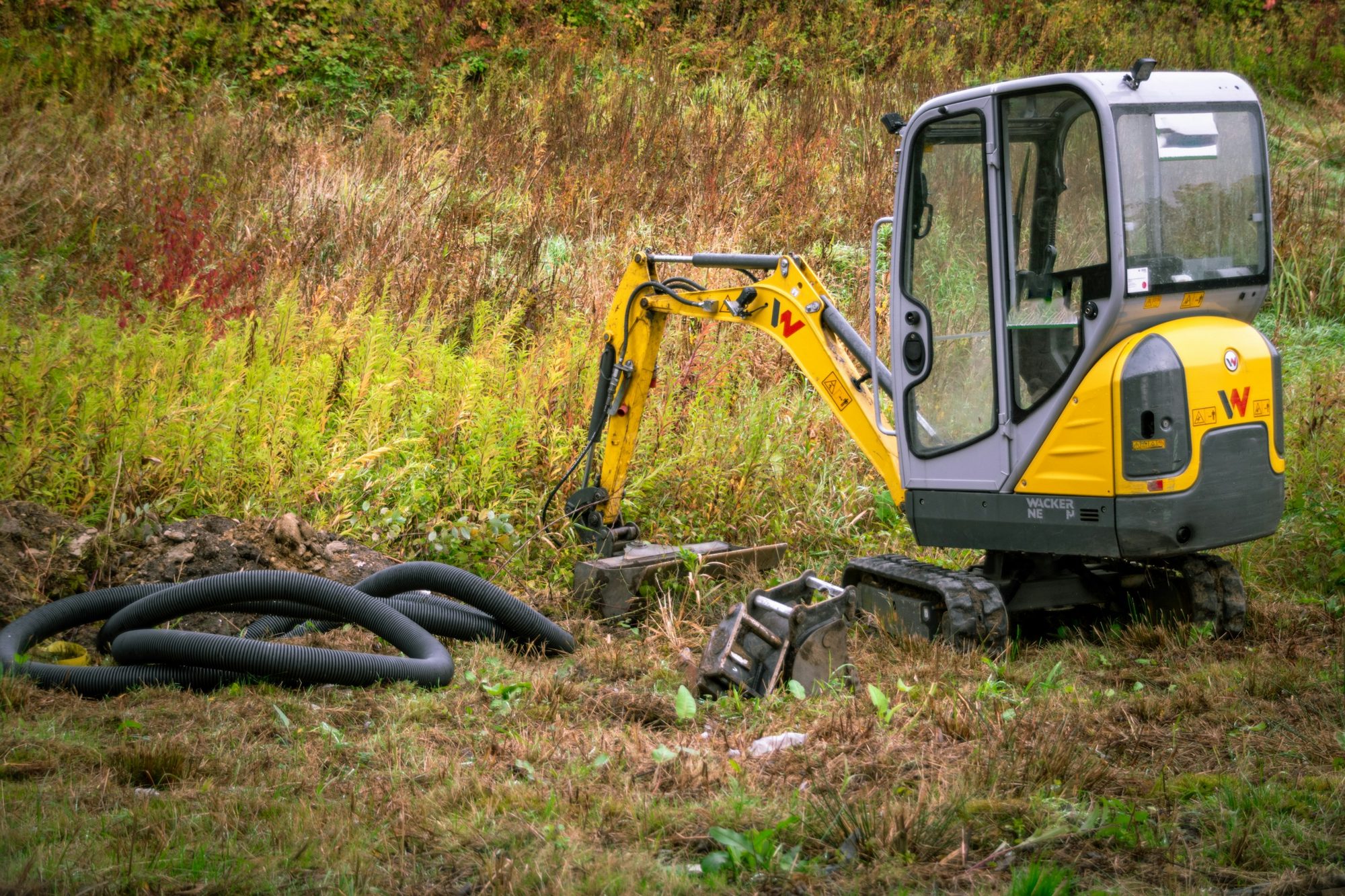
The work
Standing water, a soggy side yard, water running toward the house: in the Lowcountry these usually come down to grade, and nowhere for the water to go. Our drainage work gives it somewhere to go, whether that's regrading, swales, French drains, or clearing the ditches and culverts that should have been carrying it all along.
Know your options
Reshape the surface so water runs off on its own. Nothing buried, so nothing to clog.
Best forGround with some fall to work with
A buried channel of stone and perforated pipe that collects water and carries it away.
Best forWet spots with nowhere to run on the surface
Straight answers
Including the local rules. Where a town has the final word, we say which one and how to reach it.
There's no price list here, on purpose: no two pieces of ground are the same. Josiah walks it and gives you a straight number. What it comes down to:
Almost always the grade rather than the soil. The ground slopes so that water collects somewhere instead of leaving, and in the Lowcountry a high water table means it has nowhere to soak away to once it gets there.
Regrading the low areas so water runs off, and cutting drainage where the grade alone can't carry it. Which of the two does the work depends on how much fall there is to play with.
Usually a low pocket holding water long after the rest of the yard has drained, sometimes fed by a downspout or a neighbouring slope. Occasionally it is the water table sitting close to the surface, which is a different conversation.
A French drain to give the water a path out, or regrading to remove the pocket. Drainage here has to be planned around the high water table: a trench that fills from below solves nothing.
The grade falls the wrong way near the foundation. Common on older yards where beds have been topped up with soil and mulch over the years until the ground beside the house sits higher than it did.
Re-establishing fall away from the foundation, and drainage to carry water somewhere it can leave. This is the one worth looking at soonest: it's the problem that gets more expensive the longer it runs.
Usually because the water had nowhere to go. A drain needs an outlet lower than the problem, and with a high water table a trench dug too deep simply fills from below. Filter fabric matters too: without it, sandy soil washes into the stone and clogs it over time.
Not as concentrated runoff. Mount Pleasant's single-family stormwater guidance says runoff cannot be concentrated onto lower neighboring property, and downspouts cannot discharge within 10 feet of a shared property line. Drainage has to end somewhere it is allowed to: a ditch, a storm drain, or ground that can take it.
Free On-Site Quotes
Free on-site quotes across Mount Pleasant and the greater Charleston area.
ServingMount Pleasant · Isle of Palms · Sullivan's Island · Daniel Island · Charleston · West Ashley · James Island · Johns Island · Folly Beach