
Landscaping in Mount Pleasant & Charleston
New landscape installs: beds laid out and planted, and sod laid on ground that was graded first. Every plant is picked for the sun and salt it will get.
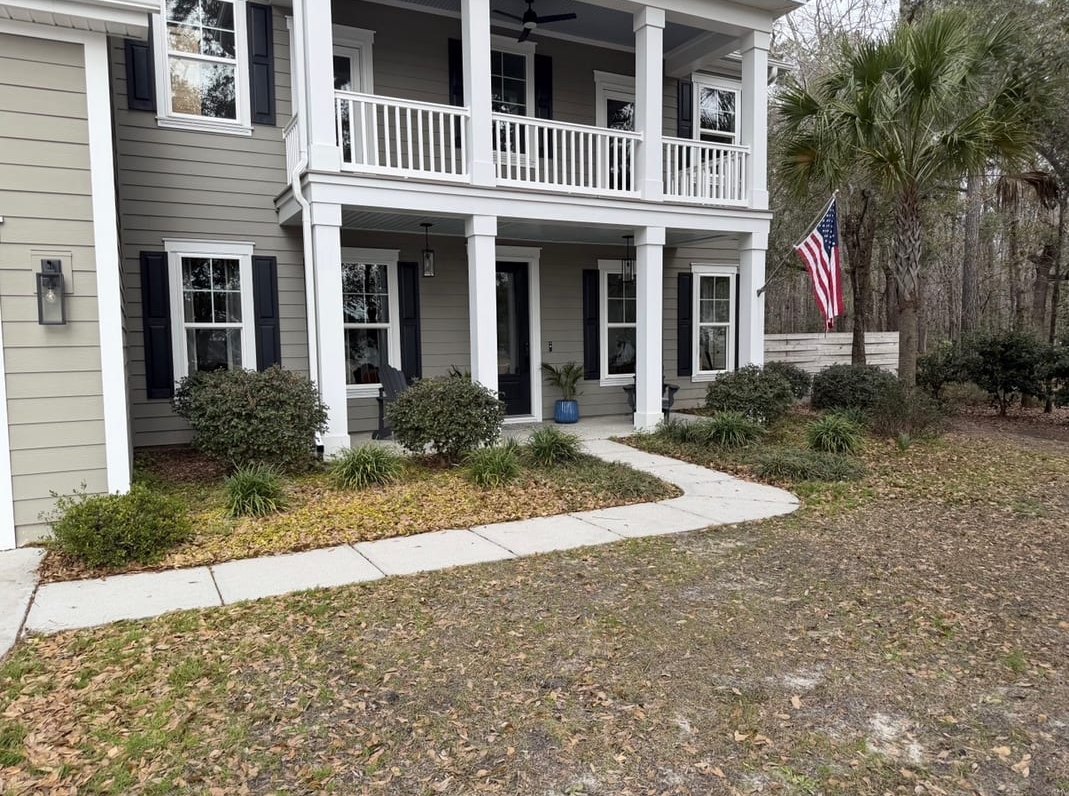
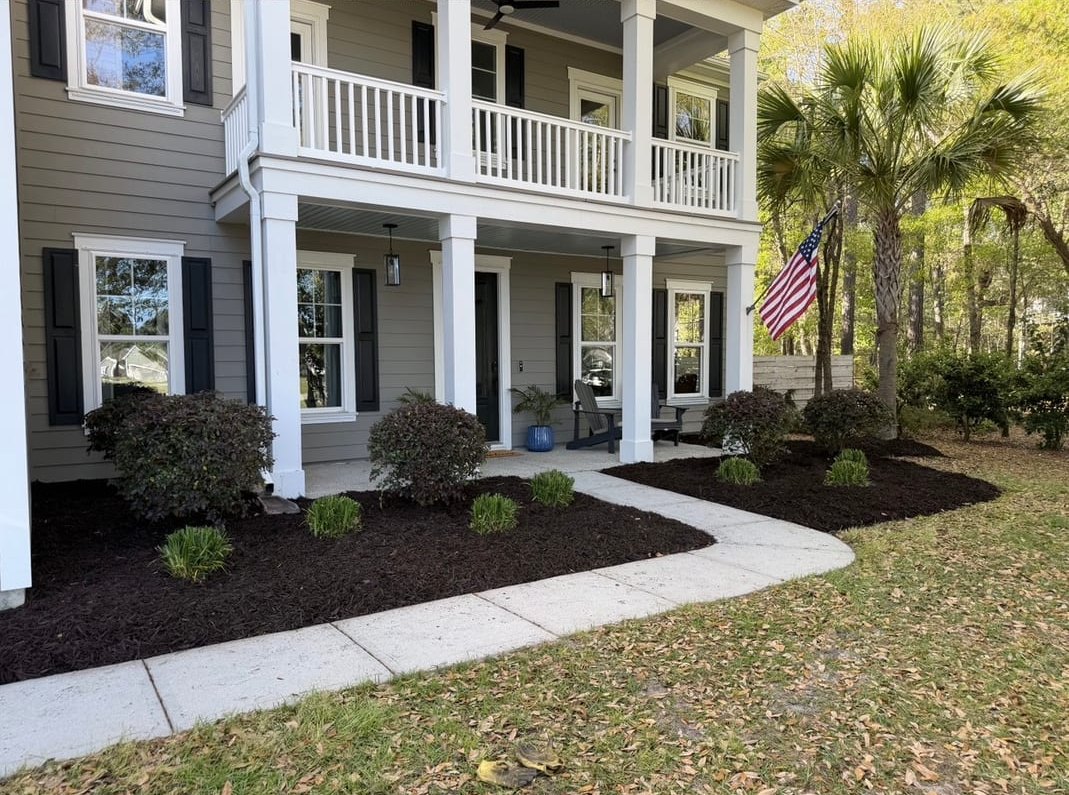
Most yards don't need more plants. They need the right ones in the right places: shrubs that suit the sun and salt they'll get, grass only where there's light enough to grow it, and beds that tie the house to the ground around it.
What’s included
- Landscape installsNew beds laid out and planted along the house, the walk and the yard
- Shrubs & treesPlanted at the right depth and in the right season, for the sun and salt each spot gets
- SodLaid on ground that was graded and prepped first, so it roots in and water runs off
- Mulch & pine strawSpread to the right depth and kept back from the siding and the trunks
- Bed edgingA clean line between bed and lawn, so the grass stays out of the beds
- Yard renovationsTired, overgrown yards cut back, cleared out and replanted
- CleanupsLeaves, overgrowth and storm debris cleared and hauled off
Lawn where it grows, beds where it won't
Sod
A finished lawn the day it goes down, on ground that was graded and prepped first. It needs real sun: even the shade-tolerant grasses want 4 to 6 hours of direct light a day.
Best forOpen, sunny ground you walk and play on
Planted beds
Shrubs, trees and groundcover in mulched beds, each plant picked for how much sun, salt and water that spot gets.
Best forAlong the house and the walk, and anywhere grass struggles
Pine straw or mulch
Under big oaks, grass is usually a losing fight. A clean bed of pine straw or mulch goes over the roots instead, with no new soil piled on them.
Best forShade under big live oaks
Questions people ask
Including the local rules. Where a town has the final word, we say which one and how to reach it.
How much does landscaping cost?
There's no price list here, on purpose: no two pieces of ground are the same. Josiah walks it and gives you a straight number. What it comes down to:
- How much ground. The size of the beds and the lawn, and how much of the yard they cover.
- What goes in. How many plants and how big they are, and which grass. A few large shrubs and trees are a different job from a bed of small ones.
- What comes out first. Old shrubs, dead grass and years of broken-down mulch, cleared and hauled off before anything new goes in.
- Getting the ground ready. Grading out low spots, and bringing in soil where the yard needs it.
- Access. Whether a machine can reach the work, or soil and mulch go in by wheelbarrow.
Where do you start with landscaping a bare yard?
Usually there's no single problem, just no plan yet. The lawn never filled in and there are no real beds, so nothing ties the house to the ground around it.
Starting from the ground: low spots graded out and the soil made ready. Then beds along the house and the walk, planted for the sun and salt each spot gets, and sod only where there's light enough to keep it.
Why won't grass grow under my oak trees?
Shade, mostly, and the tree's roots taking the water. Clemson Extension's rule is that under 4 hours of direct sun a day it's too shady for grass to grow well, and a big live oak can cast that much shade on its own.
The fix that lasts is to stop fighting the shade. The ground under the canopy becomes a bed of pine straw, mulch or groundcover, laid over the roots without piling new soil on them, and the sod stays where the sun is.
Can you redo beds that have gotten tired and overgrown?
Shrubs that have outgrown their spot, edges that have disappeared into the lawn, and years of new mulch spread over old until it's banked up against the house.
Pulling out what has outgrown its place, re-cutting the edges, taking the old mulch down instead of adding to it, and replanting with plants that fit. Then fresh mulch or pine straw at the right depth, kept back from the siding.
What grass grows best in Charleston?
Sun decides most of it. Clemson Extension rates St. Augustine and zoysia excellent in shade, though both still need 4 to 6 hours of direct sun a day. Centipede is the low-upkeep grass for open sun, but it handles salt and foot traffic poorly. Bermuda stands up to wear and salt but needs full sun. Under 4 hours of sun, Clemson says it's too shady for grass to grow well.
When is the best time to lay sod in Charleston?
Spring or fall. Clemson Extension says sod is best laid in mid to late spring or in the fall, and in the fall early enough for it to root before cold weather. Summer sod can work, but it takes a lot of water. Sod laid in winter may or may not survive, depending on the temperatures.
How deep should mulch or pine straw be?
About 2 to 3 inches for pine straw and the finer bark mulches, according to Clemson Extension, and up to 4 for coarse pine bark nuggets. Keep it 2 to 3 inches back from shrub stems and tree trunks, and 6 to 12 inches back from the house, because termite treatments are applied to the soil there. On a slope, pine straw stays put better: large bark nuggets can float off in a heavy rain.
When should shrubs and trees be planted here?
Fall. Clemson Extension calls it the best season to plant shrubs in South Carolina, because the roots keep growing through the cooler months. Depth matters as much as timing: a plant goes no deeper than its root ball, and in poorly drained or compacted ground Clemson sets the top of the root ball 2 to 4 inches above the surrounding soil. Planting too deep is one of the most common and serious mistakes it lists.
What plants hold up to salt spray?
Clemson Extension's list for the South Carolina coast rates live oak, magnolia, yaupon holly, southern wax myrtle, sabal palmetto, pittosporum and oleander as highly salt tolerant: they grow where they take direct salt spray. Plants rated moderate do best sheltered behind those, a building or a dune. For lawns, Clemson rates centipede poorly for salt and calls Bermuda a good choice for oceanfront property.
Let's talk about your next project
Tell us what you're dealing with
Free on-site quotes across Mount Pleasant and the greater Charleston area.
ServingMount Pleasant · Isle of Palms · Sullivan's Island · Daniel Island · Charleston · West Ashley · James Island · Johns Island · Folly Beach