Grind it
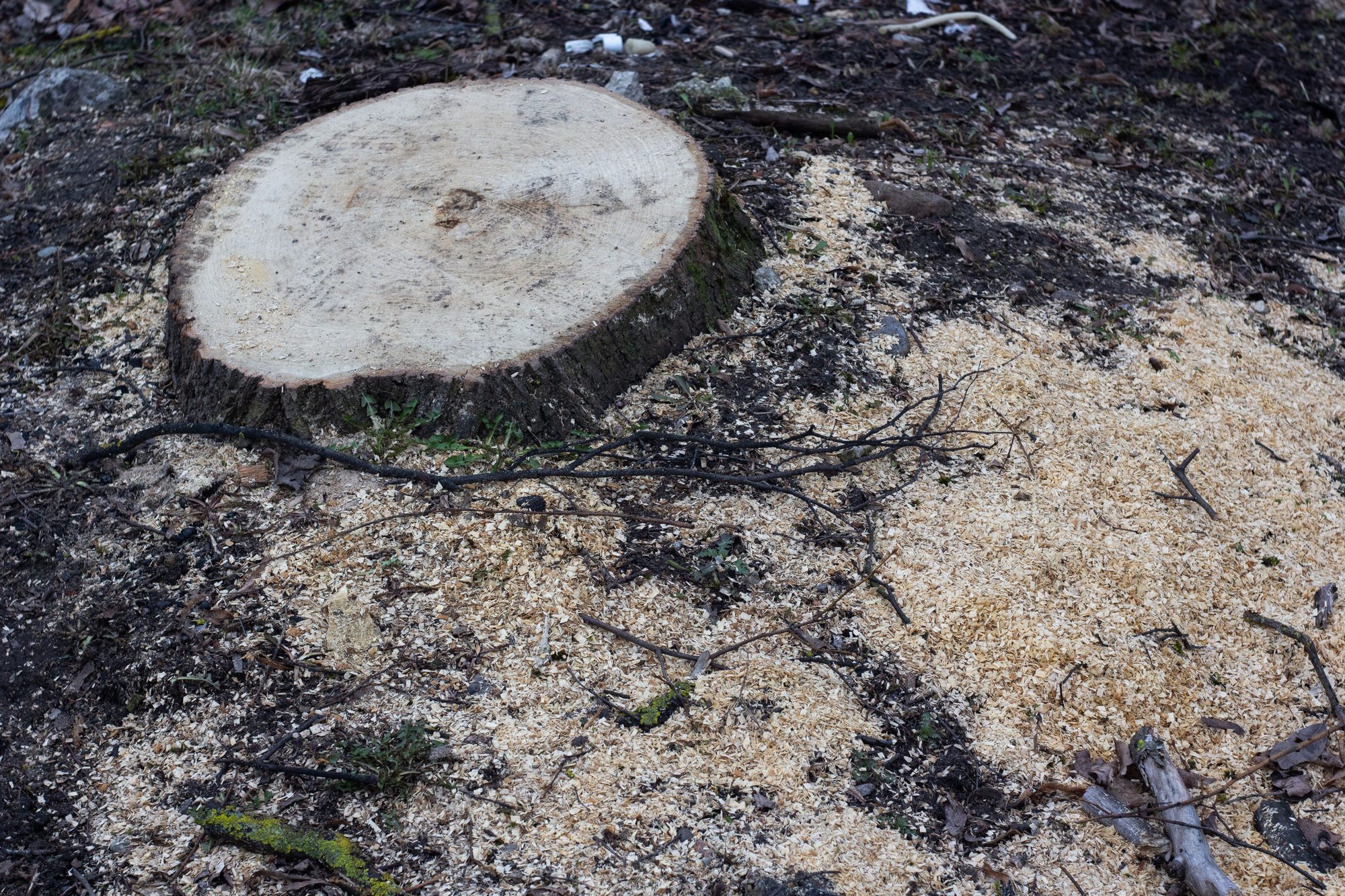
The stump is ground down below the surface and the hole filled. Quick and tidy; the roots are left to rot in place.
Best forLawns and beds you'll plant over
Service 02
Trees taken down and cleaned up, stumps ground below the surface or pulled out by the roots, and every limb hauled off.
The work
A tree that has to come out is rarely standing somewhere convenient. It leans toward the house, it's over the fence, or it came down in the last storm. We take it down, clean up every limb, and deal with the stump properly instead of leaving a trip hazard behind.
Know your options
The stump is ground down below the surface and the hole filled. Quick and tidy; the roots are left to rot in place.
Best forLawns and beds you'll plant over
The excavator lifts the stump and its root ball out whole, and the hole is backfilled and packed.
Best forAnywhere you'll dig, pour, or build
Straight answers
Including the local rules. Where a town has the final word, we say which one and how to reach it.
There's no price list here, on purpose: no two pieces of ground are the same. Josiah walks it and gives you a straight number. What it comes down to:
A lean toward the house, storm damage, or a tree that has simply outgrown where it was planted. Worth dealing with before hurricane season rather than after.
Taking it down, cleaning up every limb, and grinding or pulling the stump depending on what the ground is for next.
Stumps left behind from old removals, or a whole lot of them after clearing. They are a mowing hazard, and they stop you using the ground.
Grinding them below the surface where you'll plant or lay sod, or pulling the stump and root ball with the excavator where the ground will be dug or built on, then backfilling the hole.
Hurricane season and summer storms. A tree lying on open ground is one job; one resting on the house or the fence is a more careful one.
Cutting up what's down, taking down anything left standing that isn't safe, dealing with the stumps, and hauling it all off.
Often, yes. On a single-family lot the Town protects most trees 16 inches or more across, measured 4.5 feet off the ground (Zoning Code Table 156.702-2), and any live oak of 24 inches or more is a historic tree. Pines are exempt below 24 inches, and so are sweet gum, Leyland cypress, Chinese tallow and a handful of other species. Fines can land on the homeowner and on whoever does the cutting (§156.709), so it is worth checking before anything comes down. The Town has the final word: trees@tompsc.com or (843) 884-1229.
Each town sets its own line. The City of Charleston, which covers West Ashley, Daniel Island and parts of James and Johns Island, regulates grand trees of 24 inches and up, not counting pines and sweet gums. The Town of James Island draws the line at 18 inches, Isle of Palms reviews most trees over 8 inches, and Sullivan's Island protects trees from 6 inches. These change, so the town is always the one to confirm with.
A dead, diseased or hazardous tree can usually be approved for removal, sometimes with an arborist's letter, and after a declared emergency Mount Pleasant can waive the process for fallen and severely damaged trees (§156.704). Take photos before anything is cut: you may be asked to document it afterwards.
Free On-Site Quotes
Free on-site quotes across Mount Pleasant and the greater Charleston area.
ServingMount Pleasant · Isle of Palms · Sullivan's Island · Daniel Island · Charleston · West Ashley · James Island · Johns Island · Folly Beach